
Intentionality: The cuneiform writing has been translated and is written from one merchant to another. The private letter gives an update on textile deliveries to another settlement, requests garments for himself, and offers advice on travel.
Materiality: The artifact is a clay tablet likely inscribed using a reed stylus and then left to bake in the sun to dry. Writing is small, and on all sides, to keep the tablet small as it had to be transported to its intended recipient.
Functionality: This tablet gives an insight into the complex and detailed interactions that took place between merchants. In addition to being used for local accounting and business transactions, it was a method of communication among people across long distances, similar to sending a letter in the mail today.


Jazz & Teko. (2001). [Graffiti of Osama Bin
Laden]. Art Crimes. https://www.graffiti.org/911/JAZZ-TEKO-fromArgentina.jpg
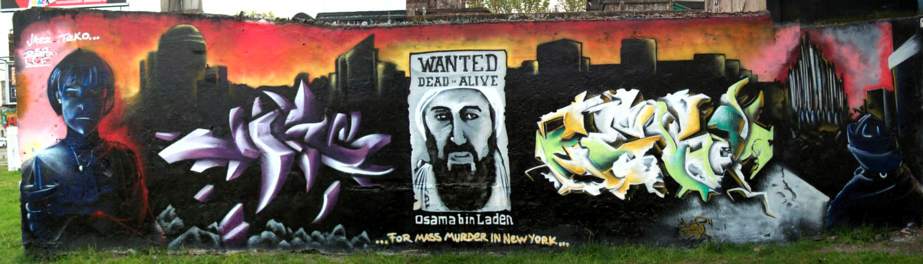
This image depicts graffiti in Argentina created by
artists known as Jazz & Teko. It most likely was created in 2001 shortly
after the events on 9/11.
Intentionality: The artists’ purpose was likely to
show they believed Osama Bin Laden was responsible for the deaths that occurred
during the 9/11 terrorist attack in the U.S and that he should pay for his
crimes.
Materiality: The artists used paint, most likely spray
paint, to create the graffiti. It is hard to tell exactly where it is located
but it appears to be on a wall of some sort.
Functionality: At the time, its function was to show people
that Osama Bin Laden was a wanted man for the attacks in the U.S., especially
because he could not be found at that time. While likely today the original graffiti
has been removed or covered up, the remaining photograph of it serves a
reminder that during that time people all over the world supported the U.S.
This was done in Argentina, and even though they are not typically considered
are ally, they wanted justice for us.
Comments
Post a Comment